

You pick up the rental car abroad. The speed limit sign says 100. A hundred what? The GPS says your hotel is "45 kilometers away" — is that twenty minutes or an hour?
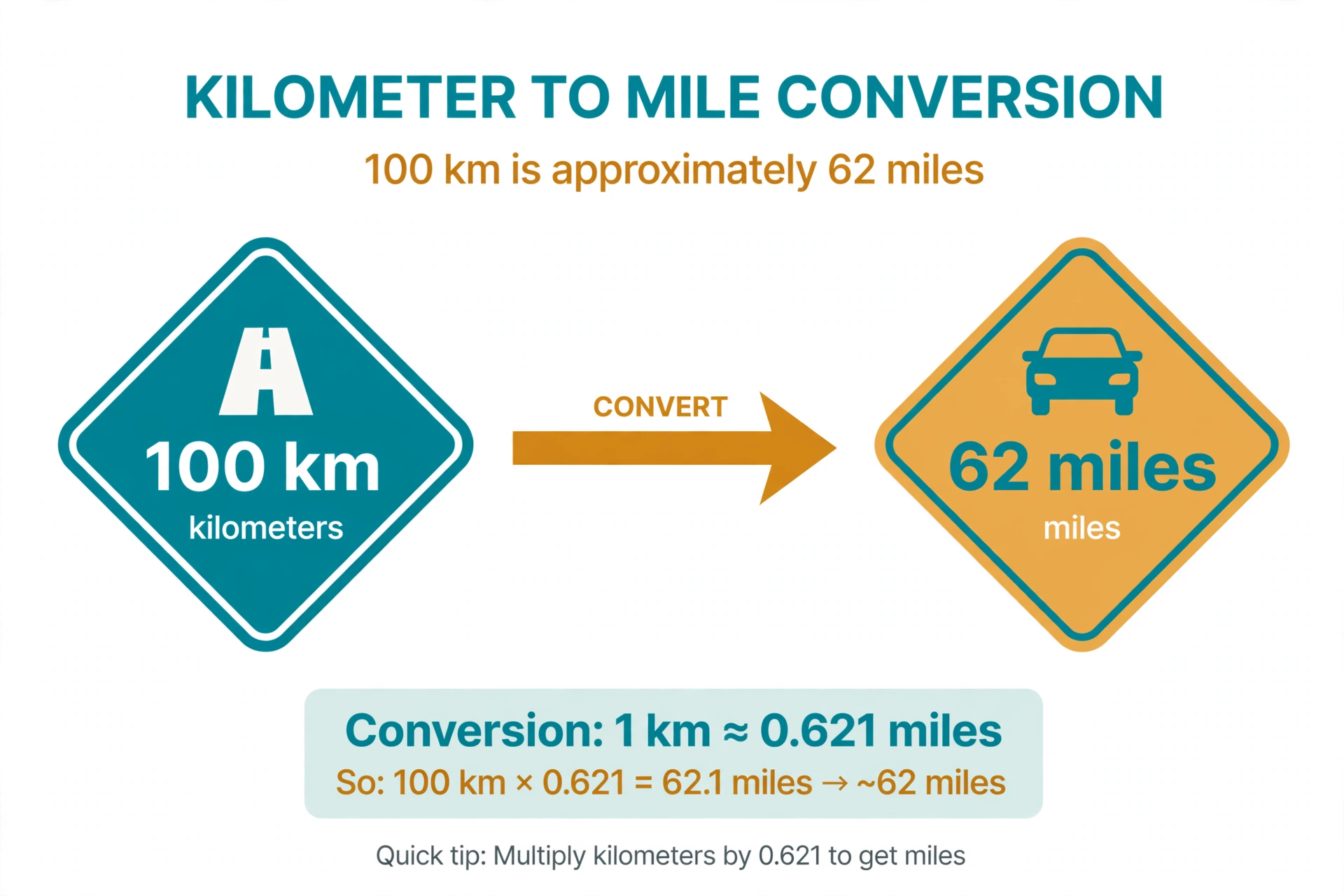
Two numbers run the show: 1 km = 0.621 miles and 1 mile = 1.609 km. A distance in kilometers is always a bigger number than the same distance in miles.
For the full picture, see our metric to imperial guide. For temperatures, see Celsius to Fahrenheit.
Kilometers to Miles: Multiply by 0.621
Worked example: 250 km to miles
250 × 0.621 = 155.25 miles → about 155 miles. At highway speed, roughly two and a half hours.
Miles to Kilometers: Multiply by 1.609
200 miles × 1.609 = 321.8 km → about 322 km.
The "Multiply by 6 and Drop a Zero" Trick
To convert km to miles in your head: multiply by 6, drop the last zero.
100 km → 600 → 60 miles (exact: 62.1). 45 km → 270 → 27 miles (exact: 27.9).
For miles to km: multiply by 1.6. 50 miles × 1.6 = 80 km (exact: 80.5).
Speed Limits You’ll Actually See
| Sign says | Means |
|---|---|
| 50 km/h | about 31 mph (urban Europe) |
| 100 km/h | about 62 mph (highways) |
| 120 km/h | about 75 mph (motorways) |
Memorize 50 km/h ≈ 31 mph — it’s the urban limit across most of Europe where fines are most common.
Rental Car Worked Example: Málaga to Granada
125 km at 120 km/h: 125 ÷ 120 = 1.04 hours → about 1 hour. Distance: 125 × 0.621 ≈ 78 miles. Return trip 250 km vs a 200 km daily allowance = 50 km over — expect an excess charge.
Distances Worth Memorizing
- 100 km ≈ 62 miles (the highway hour)
- 42 km ≈ 26.2 miles (a marathon)
- 5 km ≈ 3.1 miles (the fun run)
Frequently Asked Questions
Is the multiply-by-6 trick accurate enough for speed limits?
For estimating, yes (within ~3%). For actual speed limits, learn the real pairs instead.
How do I convert running pace?
Multiply minutes-per-km by 1.609. A 6:00/km pace ≈ 9:39/mile.
Does GPS use miles or kilometers?
It follows your phone settings — switch it to match the country’s road signs before driving abroad.
How this guide was made
Related guides
- Kilograms to Pounds and Grams to Ounces: Weight Conversions Made Simple
- Inches to Centimeters and Feet to Meters, Explained Simply
How this guide was made: This guide was written by the ArmTema team, checked against standard reference formulas, and edited for plain-English clarity. The examples use round sample numbers so you can follow the math. Last reviewed: October 2026.