
Ask five people how much sleep you need, get five confident answers. Here’s the honest version: for most adults it’s a range, not a magic number.
General information, not medical advice. Persistent insomnia, breathing pauses, or overwhelming daytime drowsiness → talk to a doctor.
The Headline: 7 to 9 Hours
Researchers keep landing here: most adults do best with 7–9 hours. Below 7 regularly: fuzzier thinking, shorter temper. It’s a range — if 7.5 hours leaves you fresh, that’s your number.
By Age
- Teens (14–17): 8–10 hours
- Adults (18–64): 7–9 hours
- 65+: 7–8 hours
No age group recommends 5–6 hours. Short sleep is a debt thing, not an age thing.
“I Feel Fine on 6 Hours”
The day test: need alarm + snooze + caffeine to reach noon? Drowsy in meetings? That’s your body voting for more. True 6-hour people wake before the alarm feeling clear — they’re rare.
Sleep Debt, Calmly
- One short night: a blip; 1–2 normal nights clear it.
- A short week: accumulates; a normal weekend mostly resets it.
- Months of short sleep: real costs — concentration, mood, immunity. Fix the pattern, not the odd late night.
You can’t bank sleep in advance. One lie-in doesn’t erase a month.
Bedtime Math: Worked Example
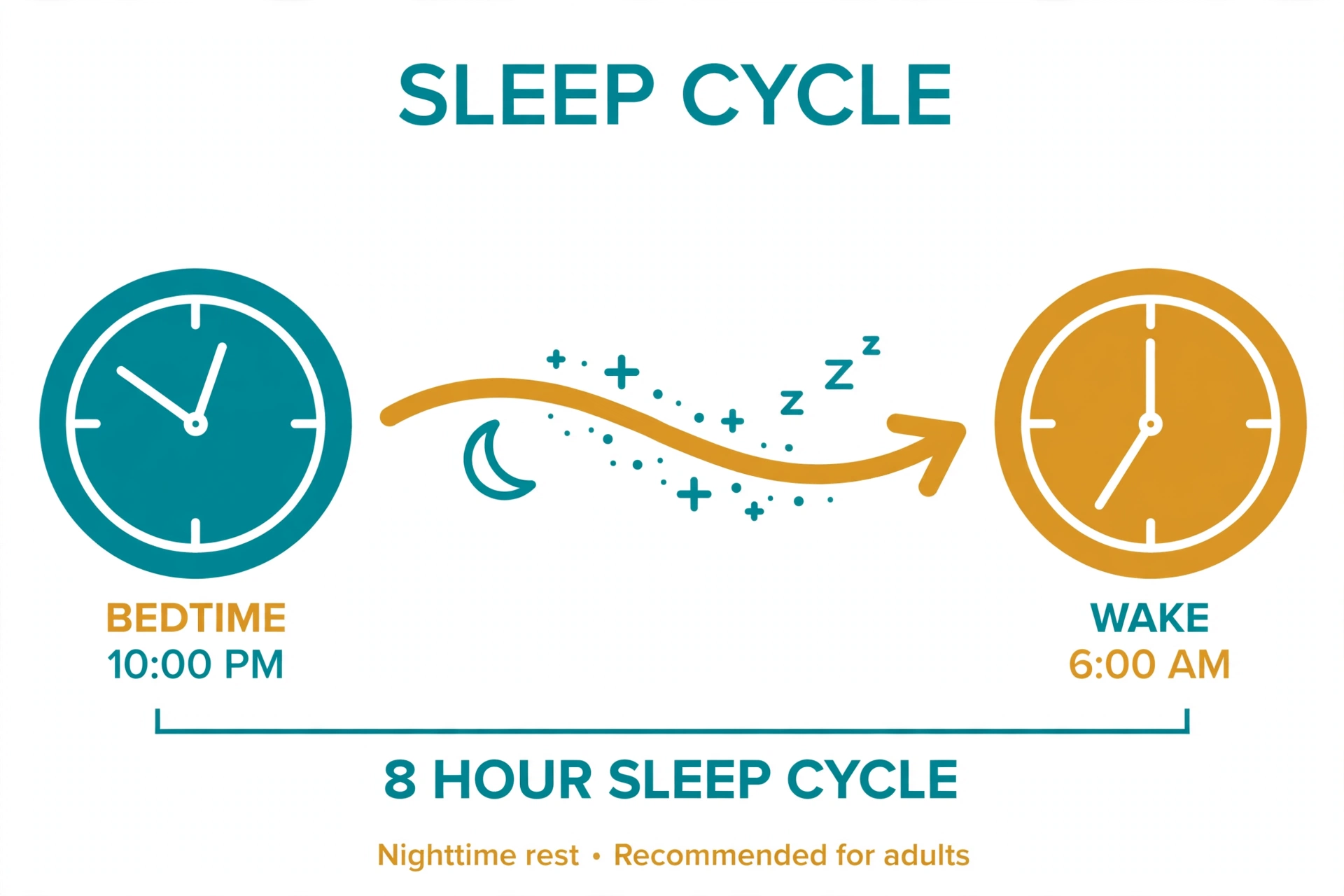
Wake 6:30 am, want 8 hours: 6:30 − 8h = 10:30 pm asleep → minus 30-min buffer → 10:00 pm in bed, lights out. Shifting from midnight? Move 15–30 min earlier every few nights.
What Actually Works
- Same wake time daily (within an hour), weekends included
- Morning daylight 10–15 min
- Screens off 30–60 min before bed
- Cool, dark, quiet room
- Last caffeine earlier (half-life ~5–6 hours)
For the full body-numbers picture: Your Body in Numbers. For food energy: How Many Calories Do You Need?
Frequently Asked Questions
Is 6 hours enough? For a small minority. Most adults dip in attention and mood — the day test decides.
Catch up at weekends? Partly — normal-length weekend sleep clears a short week’s fog. Doesn’t erase months.
Why wake at 3 am? Normal between sleep cycles; stress, alcohol, heat, or bathroom make it memorable. Weeks of it → see a doctor.
Are naps good? 10–20 min before mid-afternoon: refreshing. Long/late naps steal nighttime sleep.
8 hours but still tired? Fragmented sleep, inconsistent schedule, late caffeine/alcohol, or apnoea (loud snoring + pauses = doctor flag).
How this guide was made
Related guides
- How Much Water Should You Drink a Day? A Practical Answer
- Your Body in Numbers: BMI, Calories and Sleep, Explained Honestly
This guide was written by the ArmTema team, checked against standard reference formulas, and edited for plain-English clarity. The examples use round sample numbers so you can follow the math. Last reviewed: October 2026.